
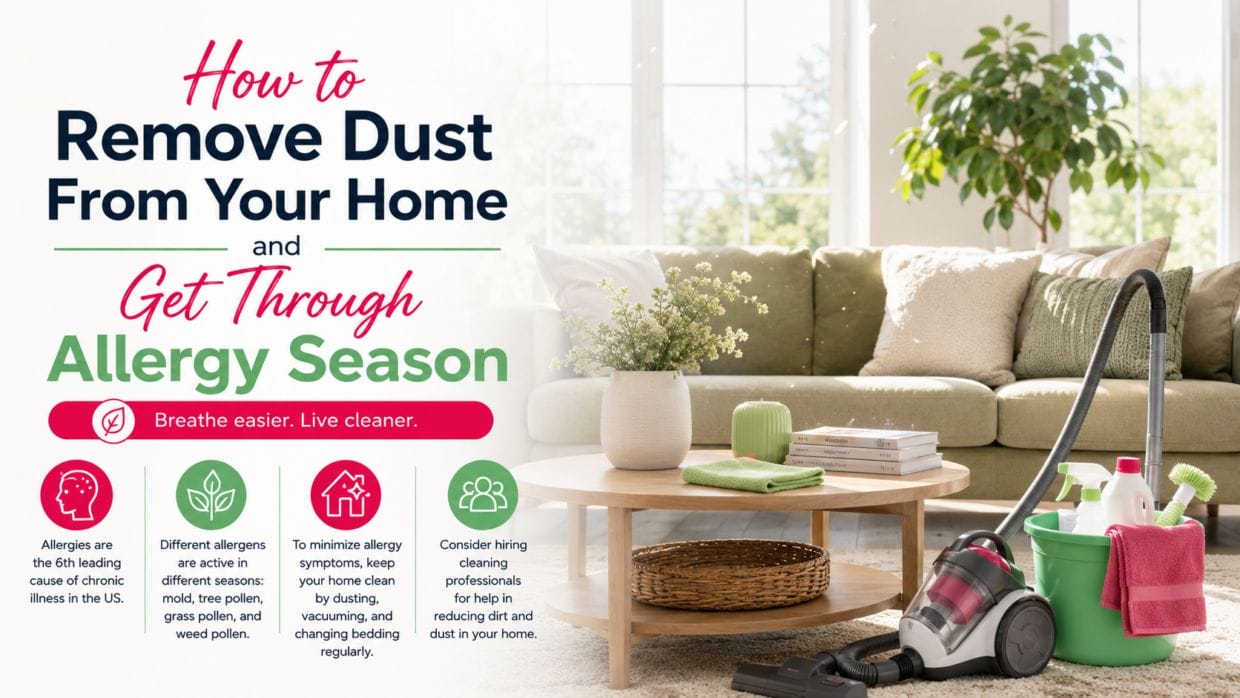
- Allergies are the 6th leading cause of chronic illness in the US.
- Different allergens are active in different seasons: mold, tree pollen, grass pollen, and weed pollen.
- To minimize allergy symptoms, keep your home clean by dusting, vacuuming, and changing bedding regularly.
- Consider hiring cleaning professionals for help in reducing dirt and dust in your home.
11 Powerful Cleaning Strategies
Allergy season can make even the cleanest home feel uncomfortable. Dust buildup, pollen, pet dander, and airborne particles circulate through the air and settle on nearly every surface. For millions of Americans, that means sneezing, itchy eyes, congestion, headaches, and interrupted sleep.
Learning how to remove dust from your home and get through allergy season is one of the most effective ways to improve indoor comfort and maintain a healthier environment. A cleaner home doesn’t just look better — it supports better breathing, better sleep, and lower stress levels.
In homes throughout Kansas City and surrounding communities, changing seasons often bring increased pollen and fluctuating humidity levels. Dust accumulates quickly when windows stay open, HVAC systems run constantly, or foot traffic increases. Fortunately, a strategic cleaning plan can dramatically reduce allergens indoors.
According to the <a href=”https://www.epa.gov/indoor-air-quality-iaq” target=”_blank”>EPA Indoor Air Quality Guide</a>, indoor air can sometimes be more polluted than outdoor air. That’s why routine dust removal and deep cleaning matter so much during allergy season.
Why Dust Becomes a Serious Problem During Allergy Season
Dust may seem harmless at first glance, but it contains a surprising combination of particles that can irritate the respiratory system. During allergy season, indoor dust becomes even more problematic because outdoor allergens enter the home through shoes, clothing, pets, and open windows.
Dust typically contains:
- Dead skin cells
- Pet dander
- Pollen
- Dust mites
- Fabric fibers
- Mold spores
- Dirt particles
- Bacteria
When these contaminants circulate through the air, they can trigger allergy symptoms and worsen indoor air quality.
Common Indoor Allergens Found in Dust
Some of the most common allergens hiding in household dust include:
| Allergen | Common Source | Potential Effects |
|---|---|---|
| Dust mites | Bedding, upholstery | Sneezing, congestion |
| Pet dander | Cats and dogs | Itchy eyes, asthma |
| Mold spores | Bathrooms, damp spaces | Respiratory irritation |
| Pollen | Windows, shoes, clothing | Seasonal allergies |
| Fabric fibers | Carpets, curtains | Airborne irritation |
Understanding what causes indoor allergy problems is the first step toward creating a healthier home.
Start With a Whole-Home Dust Reduction Plan
One of the biggest mistakes homeowners make is cleaning only visible surfaces. Dust travels constantly throughout the home, which means effective allergy prevention requires a consistent whole-home strategy.
Instead of waiting until dust becomes noticeable, create a proactive cleaning routine that targets both visible and hidden buildup.
Create a Cleaning Schedule That Works
A manageable cleaning schedule helps prevent dust from accumulating too heavily between cleanings.
Daily Tasks
- Wipe kitchen counters
- Sweep entryways
- Shake out rugs
- Run air purifiers
Weekly Tasks
- Vacuum carpets and upholstery
- Dust furniture and blinds
- Wash bedding
- Mop hard floors
Monthly Tasks
- Clean ceiling fans
- Wash curtains
- Dust vents
- Move furniture for deep cleaning
Consistency is the secret weapon when learning how to remove dust from your home and get through allergy season successfully.
Focus on High-Dust Areas First
Not all areas collect dust equally. Some locations act like magnets for airborne particles and allergens.
Focusing on these areas first delivers the biggest improvement in indoor air quality.
Ceiling Fans and Air Vents
Ceiling fans often spread dust throughout the room every time they operate. Air vents can also circulate allergens repeatedly if they aren’t cleaned regularly.
To reduce buildup:
- Dust fan blades weekly
- Vacuum vent covers
- Replace HVAC filters every 1–3 months
- Schedule professional duct cleaning if necessary
Dirty vents can significantly reduce air quality during peak allergy season.
Baseboards and Window Sills
These overlooked surfaces quietly collect layers of dust and pollen over time.
Use:
- Microfiber cloths
- Damp dusting methods
- HEPA-filter vacuums
- Mild cleaning solutions
Avoid dry dusting because it often sends particles back into the air.
Vacuuming the Right Way During Allergy Season
Vacuuming is one of the most important steps in reducing indoor allergens. However, using the wrong vacuum can actually make allergy symptoms worse.
Standard vacuums sometimes release tiny particles back into the air.
Why HEPA Filters Matter
HEPA filters trap microscopic particles instead of recirculating them.
Benefits include:
- Better dust containment
- Reduced allergens
- Improved indoor air quality
- Cleaner carpets and upholstery
For best results:
- Vacuum slowly
- Use attachments for corners
- Vacuum under furniture
- Clean vacuum filters regularly
High-traffic areas may need vacuuming three to four times per week during heavy allergy months.
Reduce Dust in Bedrooms for Better Sleep
Bedrooms should be a top priority during allergy season because people spend many continuous hours there every night.
Dust and allergens in sleeping spaces can lead to:
- Congestion
- Poor sleep quality
- Morning headaches
- Coughing
- Dry throat irritation
Mattress and Bedding Maintenance
Bedding traps skin cells, dust mites, and pet dander quickly.
To reduce allergens:
- Wash sheets weekly in hot water
- Use allergen-proof mattress covers
- Vacuum mattresses monthly
- Replace pillows regularly
Curtains, rugs, and upholstered headboards also collect substantial dust.
Keeping bedrooms cleaner can noticeably improve sleep quality and breathing comfort.
Improve Indoor Air Quality Naturally
Cleaning surfaces is only part of the solution. Air quality management also plays a major role in controlling allergy symptoms indoors.
Simple improvements can make a significant difference.
Humidity Control and Ventilation
Excess humidity encourages mold growth and dust mite activity.
Ideal indoor humidity levels stay between 30% and 50%.
Helpful strategies include:
- Running dehumidifiers
- Using bathroom exhaust fans
- Opening windows strategically
- Replacing HVAC filters
- Cleaning air vents regularly
Air purifiers with HEPA filtration systems can also help reduce airborne allergens substantially.
How Pets Increase Dust and Allergens
Pets bring joy to many households, but they also increase indoor allergens dramatically.
Pet-related allergens include:
- Dander
- Hair
- Saliva proteins
- Outdoor pollen tracked indoors
Homes with pets often require more frequent cleaning during allergy season.
Helpful strategies:
- Brush pets outside
- Vacuum furniture often
- Wash pet bedding weekly
- Limit pets in bedrooms
- Mop floors frequently
Even short-haired pets contribute significantly to airborne allergens.
The Importance of Deep Cleaning During Allergy Season
Routine maintenance helps, but deep cleaning removes the hidden buildup many homeowners miss.
Deep cleaning targets:
- Behind appliances
- Under furniture
- Air vents
- Baseboards
- Ceiling corners
- Upholstery
- Grout lines
Areas Most Homeowners Miss
Many allergy-triggering particles hide in places people rarely clean.
Common overlooked areas include:
| Area | Why It Matters |
|---|---|
| Behind refrigerators | Dust and food debris |
| Under beds | Dust mites accumulate |
| Air returns | Recirculate allergens |
| Curtains | Trap airborne particles |
| Upholstered furniture | Holds dander and pollen |
Professional deep cleaning services often use commercial-grade tools and HEPA filtration systems to remove allergens more thoroughly.
When to Hire Professional House Cleaners
Sometimes allergy season becomes overwhelming despite regular maintenance.
Professional cleaners can help homeowners:
- Save time
- Improve air quality
- Reach hidden areas
- Reduce allergens
- Maintain consistency
Professional cleaning services are especially valuable for:
- Busy families
- Pet owners
- Large homes
- Homes with carpet
- Allergy-sensitive households
offers professional residential cleaning services throughout Kansas City and nearby communities including Lee’s Summit, Independence, Raymore, Blue Springs, Gladstone, Parkville, and more.
Services include:
- Deep Cleaning
- Recurring Cleaning
- Move-In/Move-Out Cleaning
Routine professional cleaning can make a substantial difference during peak allergy months.
Why Kansas City Homes Need Seasonal Dust Control
Kansas City weather patterns create unique cleaning challenges throughout the year.
Seasonal contributors include:
- Spring pollen
- Summer humidity
- Fall debris
- Winter indoor dust buildup
Homes in areas like Kansas City, Lee’s Summit, and Blue Springs often experience rapid dust accumulation during seasonal transitions.
Recurring cleaning plans help maintain healthier indoor environments year-round while reducing the stress of constant upkeep.
Frequently Asked Questions
How often should I dust during allergy season?
Dusting at least twice weekly is ideal during peak allergy months. Homes with pets or heavy foot traffic may require more frequent cleaning.
What is the best way to dust without spreading allergens?
Use damp microfiber cloths instead of dry dusters. Damp cleaning captures particles rather than pushing them into the air.
Do air purifiers help reduce dust?
Yes. HEPA air purifiers can trap airborne particles including pollen, pet dander, and dust mites.
Can carpets make allergies worse?
Carpets can trap allergens deeply within fibers. Regular HEPA vacuuming and periodic deep cleaning help reduce buildup.
How often should bedding be washed?
Wash sheets and pillowcases weekly using hot water to reduce dust mites and allergens.
Is professional cleaning worth it during allergy season?
Professional deep cleaning can significantly reduce allergens, especially in hard-to-reach areas and high-traffic homes.
Conclusion
Learning how to remove dust from your home and get through allergy season requires more than occasional cleaning. It involves consistent maintenance, smart cleaning habits, improved air quality management, and attention to hidden allergen sources.
A cleaner home supports:
- Better breathing
- Improved sleep
- Reduced stress
- Healthier indoor air
- Greater comfort year-round
For homeowners throughout the Kansas City area, professional recurring cleaning and seasonal deep cleaning can make allergy season far more manageable.
Whether you need help with routine maintenance or a comprehensive deep clean, professional services can help restore comfort and cleanliness throughout your home.
Visit the official blog at Two Gals & A Broom for more seasonal cleaning tips and home care insights.

Two Gals & A Broom is a professional house cleaning service in Kansas City, Missouri. We’ve been recognized year in and year out as the best maid service in Kansas City.
Share this article
Related Posts


Follow us
A quick overview of the topics covered in this article.
Two Gals & A Broom is a professional house cleaning service in Kansas City, Missouri. We’ve been recognized year in and year out as the best maid service in Kansas City.